Saturday, 15 July 2017

GTBank Annual Autism Programme for 2017


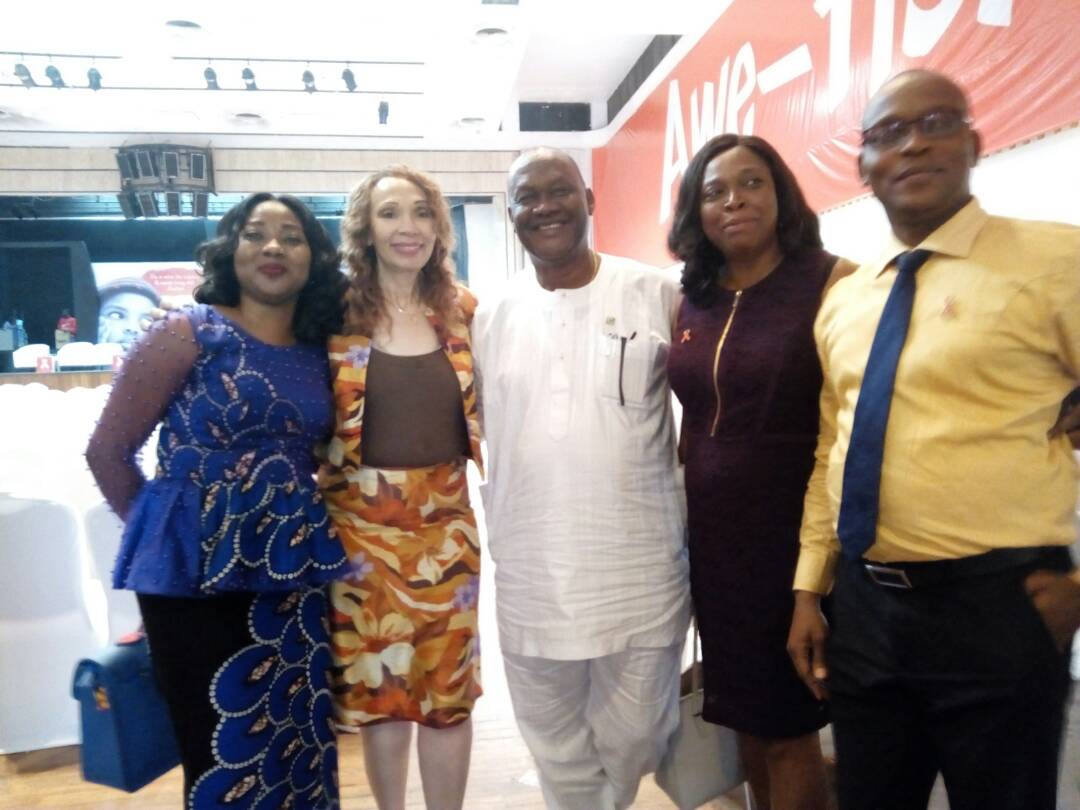
In line with our mission at the Dewdrops Community Center for Special Needs, to ensure that no child is left behind regardless of any disability status, we do not neglect the fact that participating in international and national conferences as well as trainings are paramount in achieving this mission. With this in focus the Dewdrops Community Centre was duly represented at the 7th Annual Autism Programme for 2017 organized by the GTBank Nigeria.

The theme of the conference was: "Childhood to Adulthood Communication and Social Development." The conference was organised under the  Orange Ribbon Initiative of the GTBank Nigeria. An initiative that supports children living with Autism Spectrum Disorders and their families.

The programme began on Wednesday, 12th July 2017 with a Press Conference, followed by two days of presentations and discussions. Various specialists in the field of special needs were in attendance as key speakers and/or discussion panelists. Some of the core topics discussed at the event were:

Parents communication intervention plan for children and adolescents with ASD.

Puberty and Autism: What to expect.

Understanding social and emotional development from childhood to adolescence.

Addressing Social communications in children and Adults.

Looking for Way Forward with Autism through Educational Partnerships and Research - Recent Findings.

Teaching sex education to pre-teens.

Helping your child during development.

Promoting Healthy Living and Wellness in Autism Communication development and Inclusion.

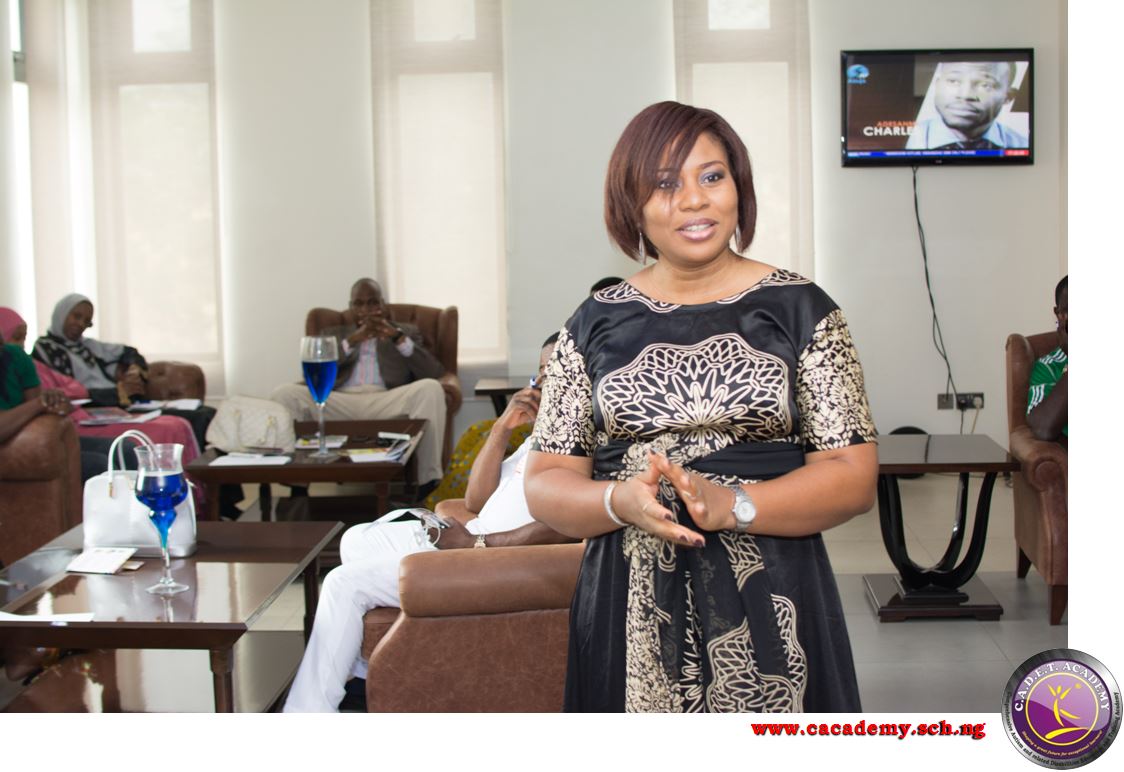
The plenary sessions were broken down into diverse trainings on different sub topics. The programme was rounded up with an interactive session between the panel and the audience. Our very own Mrs. Lola Aneke the Program Director of the Dewdrops Community Center for Special Needs was a panelist.

Here are some photo stories of  the event:


Saturday, 27 May 2017

Children’s Day – Celebrating Children Living with Special Needs


Today - May 27 is set aside to celebrate children in Nigeria. It’s known as Children’s Day! It’s a day on which many children are given special attention and love. But could it be possible that not all children benefit from the special love and attention given to their peers who may be considered more normal than they are? For these children who have been classed by family and even society as not "normal" enough, it may just be that a little more information about their condition is required in order for them to be better understood. Understanding children with Special Needs is a great way to accept and accommodate them fully in spite of their differences.
          Special needs in children describe a wide variety of conditions which set these children apart as uniquely different. These conditions range from physical and mental disabilities to various learning difficulties and challenges. This post will focus on children with learning challenges.

Signs of Learning Challenges in Children
         Parents or teachers normally become concerned when a child is not imbibing learning at the same pace with his or her peers. When this happens, it would be important to pay closer attention to the child in order to understand the specific challenges faced. This would enable the parents to make a timely decision to start an early intervention. The earlier the intervention, the more positive and enriching the child's educational experience would be.

The following are some signs to look out for:
a.       A 3 year old who consistently is unable to catch a large ball.
b.      A 4 year old who struggles with the mechanics of walking upstairs.
c.       A 5 year old who cannot complete a simple puzzle.
d.     Difficulty recognizing rhymes or segmenting words based on sounds and syllables.
e.       Improper pencil grasp.
f.       Poor working memory despite repeated instruction.
g.       Continued struggles with visual and/or auditory information.
h.      Daydreaming during instruction.
i.        Confusion over routine tasks involving steps.
j.        Failure to fully complete age appropriate chores.
k.       Speech delays or a fear of speaking.
l.        High levels of anxiety over school work.   
If these signs are observed, there's no need to panic. A Response to Intervention (RTI) would be required which is normally provided by a special education teacher.

A Note to Parents
          As a parent who has observed some of the signs listed above, you need to be careful not to label your child too quickly before he or she begins elementary/primary school. This is because it is normal for some children to have delays in skills for any number of reasons.

          Also, bear in mind that your child may excel in different subject areas. Some children who struggle with math may excel in fine arts. This does not necessarily indicate a learning challenge. 

          Finally, make effort to find out your child's preferred learning style as early as possible. Some children struggle with learning simply because their teacher has not understood and employed their preferred learning style in their teaching repertoire.

        I'll end this post with an interesting quote from a child with Special Needs:
"I never understood why my friends loved to read. My mom and dad tried to encourage me with games and puzzles. Sometimes they would get frustrated because no matter what, I didn't understand. When I was in second grade, my favorite teacher told me I was smart, but that maybe I learned differently, and she sent me in for some tests. I ended up taking a lot of tests, and the doctor told my mom I had Dyslexia. This is a learning challenge that makes reading really hard. Now that I know I have to learn a different way, I have hope. I don't feel embarrassed anymore that my friends catch on faster than I do." - Anonymous

Reference:
Understanding Special Education - http://www.wcpss.net/adult-edu

Sunday, 23 April 2017

Autism Awareness Family Funfair by the Dewdrops Community Centre for Special Needs

In the month of April, Nigeria joined the rest of the world to mark the International Month for Autism Awareness. The theme for 2017 is: Towards Autonomy and Self-Determination. As an organization, the non-profit Dewdrops Community Centre for Special Needs Abuja in conjunction with the Comprehensive Autism and related Disabilities Education and Training (C.A.D.E.T.) Academy, organized an Autism Awareness Family Funfair, at the Canterbury Children's Park in Abuja, Nigeria on Saturday 22nd of April. The Funfair served as a platform for play and fun, "inclusive" interaction and discovery, to create awareness about autism, educate, inspire and encourage families, through various games and play items among families of children living with autism and various developmental disabilities as well as children and families of typical children from the public.

The event was well attended by many families of typical children as well as children with Autism Spectrum Disorder, some regular school teachers, prominent school owners, caregivers and members of the press. Although the event was arranged strictly for children and their families to unwind, relax and have fun, it also gave me the opportunity, as the special education Program Director of the Dewdrops Community Centre, together with my team, to educate and enlighten the participants on some important facts about the challenges of autism and related disabilities among families. The refreshments served were specially prepared as "gluten free" and "casein free" snacks and beverages which is nutrionists consider as healthier for consumption by children with autism.

The event culminated into an emotionally charged atmosphere of fun, lively games, cake cutting and group photo shoot sessions. If you missed this event, don't worry, more of our events and activities are scheduled for the months ahead. You may visit our Facebook page HERE:  to view the official photos. Or you may join our online Family Support Forum HERE to stay informed.

Some photo highlights are below, after the cut.


Monday, 4 April 2016

2016 Autism Family Support & Stakeholders Forum


On Saturday, 2nd of April, Nigeria joined the rest of the world to mark the International Day for Autism Awareness. As an organization, the Comprehensive Autism and related Disabilities Education andTraining (C.A.D.E.T.) Academy in conjunction with the non-profit Dewdrops Community Centre for Special Needs Abuja, organized an Autism Family Support and Stakeholders Forum, at the Nigerian Air Force (NAF) Conference and Suites in Abuja, Nigeria. The forum served as a platform for networking and discovery, to create awareness about autism, educate, inspire and encourage families, through discussions sharing of experiences by parents of children living with autism and various developmental disabilities.

The event was well attended by many parents of children with Autism Spectrum Disorder, some regular school teachers, prominent school owners, caregivers, and very important personalities in the Federal Government of Nigeria, such as Dr. Dennis R. Shatima – a renowned pediatric neurologist and the Chief Consultant Pediatrician at the National Hospital Abuja. Dr. Shatima who happened to be one of the main speakers at the forum, gave deep insights on the possible causes of developmental disabilities in children and the impact on their families. Mrs. Angela Ikuomola, a mother of a child with autism, and the founder of the Ephphatha Centre in Abuja, also gave a soul-stirring speech that gripped the attention of the participants for about 30 minutes.

The event gave me the opportunity, as the special education Program Director of the C.A.D.E.T. Academy and founder of the Dewdrops Community Centre, to educate and enlighten the participants on some hard facts about the challenges of autism and related disabilities among families. Some of the points highlighted on my paper are the need for all concerned stakeholders to be aware that families of a child with disabilities may be at risk from the following impacts:

• Financial hardship
• Strained emotional relationships
• Restricted social life
• Higher stress levels
• Modifications to family activities and goals
• Time restrictions caused by care demands.

These families are also likely to experience:

• Sleep deprivation
• Performing unpleasant procedures
• Lack of baby-sitters.

The event culminated into an emotionally charged atmosphere of lively discussion among the various participants, and some parents shared their heartfelt experiences.

If you missed this event, don't worry, more of our events and activities are scheduled for the months ahead. You may visit our Facebook page HERE:  to view the official photos. Or you may join our online Family Support Forum HERE.

Some photo highlights are below, after the cut.


And guess what? The family forum ended on a romantic note, with a marriage proposal to one of the staff of the C.A.D.E.T. Academy.


Monday, 21 March 2016

Down Syndrome is an Intellectual Disability. But did you know?


Today, 21st March is observed globally as World Down Syndrome Day! Down Syndrome is a genetic disorder caused by the presence of all or part of an extra copy of chromosome 21. It is generally associated with physical growth delays, characteristic facial features, and mild to moderate intellectual disability.

I find it quite interesting that in many societies, including Nigeria where I live, there exists a significant number of individuals living with intellectual disabilities, yet very little is understood about them. Oftentimes, they have erroneously been tagged as "imbecile," or "mentally retarded."

Definition

The American Association on Intellectual and Developmental Disabilities (AAIDD) defines intellectual disability as, 

"a disability characterized by significant limitations both in intellectual functioning and in adaptive behaviour as expressed in conceptual, social, and practical adaptive skills. This disability originates before age 18."

From the definition, 2 deductions can be made as follows:

a.      Intellectual disability involves problems in adaptive behaviour, not just intellectual functioning.

b.     Persons with intellectual disability can improve (particularly,  those with mild intellectual disability).

Persons with intellectual disabilities are professionally classified as follows:
        a.      Mild (IQ of about 50 to 70)
        b.     Moderate (IQ of about 35 to 50)
        c.      Severe (IQ of about 20 to 35)
        d.     Profound (IQ below 20)

Causes and Identification

Some of the causes of intellectual disabilities are as follows:
a.      Chromosomal disorders such as in Down Syndrome.
b.     Disorders of brain formation.
c.      Maternal malnutrition during gestation.
d.     Fetal alcohol syndrome.
e.      Traumatic brain injury.
f.      Possible hereditary causes.
g.    Unstimulating adult-child interactions can also lead to mild intellectual disabilities.

Individuals with intellectual disabilities can be identified by assessments which combine individual IQ tests and adaptive behaviour measures. The IQ tests are used to assess intelligence while the adaptive behaviour usually involve the parents, teacher or other professional answering questions related to the individuals independence and daily living skills and maladaptive behaviour. (Hallahan, Kauffman, & Pullen, 2012).

Special Education for Learners with Intellectual Disabilities

Special education considerations for these individuals will be such that if the learner has a lower degree of intellectual disability, the teacher should emphasize academic skills. However, if the individual displays a higher degree of intellectual disability, emphasis should be on self-help, community living and vocational skills development.

When the intellectually disabled student is included in a regular classroom, teachers should plan creative ways to prevent the student from feeling socially isolated and becoming inattentive. Peer assisted learning (PAL) is a great way to achieve this goal.

As in most cases of developmental disabilities, early intervention programs can successfully improve the development of children with intellectual disabilities.


Friday, 30 October 2015

The Day Mrs Dotun Akande of Patrick Speech and Language Centre, Lagos - Visited the C.A.D.E.T. Academy


On the 30th of October 2015, The Comprehensive Autism and related Disabilities Education and Training (C.A.D.E.T.) Academy Abuja was visited by Mrs Dotun Akande, Founder and Proprietress of the Patrick Speech and Language Centre in Lagos, Nigeria. The Patrick Speech and Language Centre is a unique centre for children with Autism Spectrum Disorders, Asperger Syndrome and other related developmental disabilities. For over 10 years, the Centre has been at the forefront of increasing awareness about Autism Spectrum Disorders in Nigeria. 

Autism spectrum disorder (ASD) is a developmental disability that is characterized, in varying degrees, by difficulties in social interaction, verbal and nonverbal communication and repetitive behaviours. There is often nothing about how people with ASD look that sets them apart from other people, but people with ASD may communicate, interact, behave, and learn in ways that are different from most other people.

* About 1 in 68 children has been identified with ASD according to estimates from the U.S. Centers for Disease Control and Prevention (CDC) Autism and Developmental Disabilities Monitoring (ADDM) Network.

* ASD is reported to occur in all racial, ethnic, and socioeconomic groups.

* ASD is almost 5 times more common among boys (1 in 42) than among girls (1 in 189).

* ASD is a lifelong disability and there is no known cure.

* Early diagnosis and intervention could help a great deal in managing ASD.

*(Source: United States Centers for Disease Control and Prevention).

The visit offered an opportunity for cross fertilization of ideas in the areas of special education needs and awareness efforts between the two organizations. We would like to thank Mrs Dotun Akande for honouring us with her visit, her words of encouragement and also for her kind donation in support of the children on our program. We celebrate you ma!

Here are some pictures from the visit: